42. GIGI (1973)

While countless musicals had been adapted for the silver screen by the early seventies, no movie musical had made the transition to the Broadway stage until Gigi opened in 1973.  

It was Edwin Lester, the artistic director of the Los Angeles and San Francisco Light Opera Society who thought that turning the 1958 Oscar winner into a stage musical would be a wonderful idea and encouraged Alan Jay Lerner to write a libretto based on his screenplay. Though composer Fredrick Lowe had retired after Camelot opened in 1960, Lerner persuaded him to collaborate on four new songs for the stage version of Gigi (they were also writing a movie musical based on The Little Prince).  

After a successful run in L.A, the show came to Broadway where it did not repeat its success. The story about a young girl being groomed as a courtesan seemed quite tasteless on stage, and her transformation from young girl to a woman seemed like a reprise of My Fair Lady.  Also, the sets and costumes of the stage show paled in comparison to the ones designed by Cecil Beaton for the movie.

Gigi  the stage musical only ran for 103 performances but it did win the Tony for Best Score, this despite the fact that only four new songs were written for the show (the question of how many songs must be written in order to be eligible for the Best Score Tony persists to this day).  Gigi the stage musical was produced in London in 1985 where it ran for a respectable seven months.  Yet another incarnation was produced at the Kennedy Center with a new book by Heidi Thomas and starring Vanessa Hudgens as Gigi.  It came to Broadway where it ran for just 86 performances.

43. SEESAW (1973)

Despite the fact that it was the first musical to lose over a million dollars, Seesaw is not usually looked upon as a flop. Perhaps that’s because it’s a well-known fact that the show that opened in New York was much better than the show that had opened in Detroit. Or, to paraphrase a Cy Coleman/Dorothy Fields song from the show, “It’s Not Where You Start”.

Seesaw was based on Williams Gibson’s charming two-character play Two For The Seesaw, which was blown up into a big, loud spectacle by its creators. The show debuted to terrible reviews in Motor City. Rather than issue a recall the producers called in rising star Michael Bennett to turn the show around and gave him carte blanche freedom to do so. Director Edwin Sherin and choreographer Grover Dale were sent packing and Michele Lee replaced leading lady Lainie Kazan. Librettist Michael Stewart stormed off and took his name off the show, so Michael Bennett ended up taking credit for the book.

Brutal as these actions seemed, the show did improve during the tryout. The most inspired decision that Bennett had was to hire the 7’0” tall Tommy Tune to choreograph a number for himself and the 4’8” Bayork Lee.

Seesaw received better than expected reviews when it opened at the Uris (now Gershwin) Theater. As a publicity stunt, then mayor John V. Lindsey appeared on stage during the “My City” opening number for one performance only. In the end though, it was all in vain. Seesaw closed after 296 performances. However, Michael Bennett won a Tony Award for his choreography and Tommy Tune for Best Featured Actor in a Musical.

By the way, the young man to the left of leading man Ken Howard is a 19-year-old Giancarlo Esposito, later to become famous for his roles in Do The Right Thing and Breaking Bad.

44. IN MY LIFE (2005)

In 1977 Madison Avenue jingle writer Joseph Brooks wrote and directed a film called You Light Up My Life. The film was a bomb but the title song, which Mr. Brooks wrote, became a smash. Not much was heard of Brooks until 1989 when he composed the music for a big, lavish West End musical based on the German film Metropolis. It was a bomb. Not much was heard from Joseph Brooks until 2005 when he wrote the book, music, lyrics, directed and some believe self-financed a musical called In My Life.

And what pray tell did Mr. Brooks concoct? A love story about a boy with Tourette’s syndrome and a woman suffering from OCD. The boy gets help from God, who also doubles as a Madison Avenue jingle writer wanting to write an opera. Audiences were treated to an obscenity spewing hero who dances with a skeleton and a giant lemon that lowers onto the stage.

This ultimate vanity production received scathing reviews and closed after less than a month. Not much was heard of Joseph Brooks until 2009 when he was charged with leading several women into his apartment and raping them. He committed suicide in 2011. His son, supposedly the inspiration for In My Life’s hero, was convicted of murder in 2013.

45. CANDIDE (1956)

One of the principal rules of creating a new musical is making sure that all of the collaborators are working on the same show. This didn’t appear to be the case when Candide went into production. Lillian Hellman, who conceived of the idea of writing a musical based on Voltaire’s novel, intended her book to be an attack on the McCarthy era witch-hunts that had been going on. Leonard Bernstein on the other hand wrote a score that was light, buoyant and bubbly while Tyrone Guthrie staged the show as a broad farce. Inevitably the elements worked against each other and Candide only lasted 73 performances on Broadway.

But like Anyone Can Whistle, Candide was kept alive thanks to a stellar cast album (both were produced by Columbia Records cast album guru, Goddard Lieberson). Unlike most flops though, Candide got a second chance to succeed on Broadway.
In 1974 Harold Prince agreed to direct a production for the Chelsea Theater Center at the Brooklyn Academy of Music. However, he only did so after Lillian Hellman allowed her book to be revised. A new, lighthearted libretto was written by Hugh Wheeler, several new lyrics were added by Stephen Sondheim and Prince created an environmental staging that gleefully emphasized the fun and gaiety of the score. After a triumphant run in Brooklyn, Candide moved to the Broadway Theater where it ran for 740 performances (though apparently did not turn a profit). Since then Candide has had numerous productions in legitimate theaters, opera houses and in concert halls. Oh, and the shows overture was used as the theme song to The Dick Cavett Show.

46. ANYONE CAN WHISTLE (1964)

By 1964 Stephen Sondheim’s career was smoking. As the lyricist of West Side Storyand Gypsy and the composer-lyricist of A Funny Thing Happened on the Way to the Forum, Sondheim was 3 for 3. But all winning streaks cool and for Sondheim it cooled with his fourth Broadway at bat.

For Anyone Can Whistle Sondheim reunited with his West Side Story and Gypsy collaborator Arthur Laurents, who not only based the libretto on his own original story but also directed the production. A satire on capitalism and conformity, Whistle was set in a town that manufactures a product that doesn’t run out, therefore the town mayor (Angela Lansbury in her first stage musical) concocts a miracle.

Whistle received wildly disparate reviews from raves to outright pans. The audience didn’t meet the show halfway though, and Anyone Can Whistle closed after just nine performances.

Like many of the shows on this list, Anyone Can Whistle has been kept alive thanks to its cast recording. Many Sondheim aficionados will argue that the show was ahead of its time and its unusually structured score broke the mold and lead to the future developments that Sondheim would pioneer. Either way, Whistle has rarely been revived though there have been several concert productions.

47. MERLIN (1983)

In 1974 age of Aquarius conjuror Doug Henning starred in The Magic Show, a musical in which Henning played a magician in a New Jersey night club. The fact that Henning could neither sing nor act wasn’t a problem. Author Bob Randall and composer Stephen Schwartz simply had the other characters sing and tell the story. Henning needed only to provide the illusions, which he did with spectacular results. The Magic Show ran for four years.

When Henning returned to Broadway in 1983 it was in Merlin, a musical in which Henning played the title character. This meant that Henning had to sing and act, something that no amount of magic could fix. Despite being backed up by both Chita Rivera and George Lee Andrews and some kitschy tunes by Elmer Bernstein and Don Black, Merlin failed to catch on. As Nathan Lane, who made his debut in the show pointed out years later, “Doug Henning made the audience disappear”.

48. PIPE DREAM (1955)

No one is immune to failure on Broadway. Not even Rodgers and Hammerstein. During their eighteen-year collaboration Dick and Oscar could boast of having written five bonna fide smash hits (Oklahoma!, Carousel, South Pacific, The King and I and The Sound of Music), one modest hit (The Flower Drum Song) two near misses (Allegro and Me and Juliet) and one outright flop, Pipe Dream.

The show was based on John Steinbeck’s novel Sweet Thursday. The team watered down the social commentary and avoided confronting the fact that Suzy, one of the main characters, was supposed to be a prostitute.

On opening night, John Steinbeck quipped that the show would be one of Rodgers and Hammerstein’s “two-year flops”. Unfortunately, he was short by one year and five months. Pipe Dream is rarely performed today, but it was at one time considered as a vehicle for The Muppets. Would they admit that Suzy was supposed to be a prostitute if played by Miss Piggy? We’ll never know.

49. SEUSSICAL (2000)

Many shows fail because they are blown up out of proportion. But underproduction can be just as detrimental to a shows success. Take for example Seussical.

This show, conceived by Eric Idol of Monty Python fame and written by the lyricist-composter team of Lynn Ahrens and Stephen Flaherty (Once on this Island, Ragtime), Seussical ingeniously combined various Dr. Seuss stories together into a tuneful and fun morality play.

Unfortunately the show was brought to Broadway by those notorious penny pinchers Barry and Fran Weissler. They set out to do the show for as little money as possible and it showed, a huge liability when competing with Beauty and the Beast and The Lion King. When Seussical opened to mixed reviews and sluggish box office, the Weisslers resorted to their usual Hollywood Squares method of casting, first bringing in pre-Justin Bieber heartthrob Aaron Carter and then the biggest act of desperation of them all, Rosie O’Donnell. Nothing worked and Seussical closed after six months.

But like most of Dr. Seuss’s stories, the universe did right itself in the end. Seussical has become a staple of school and youth theaters, many of whom mount productions that put the original Broadway outing to shame.

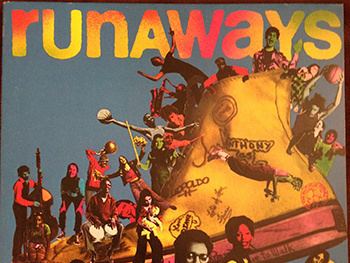
50. RUNAWAYS (1978)

Image result for Runaways Broadway 1978

When Joseph Papp established the Public Theater on Lafayette Street back in 1967, it’s safe to say that Runaways was precisely the kind of show that he had in mind for the theater. A show that confronted the ills of society while building and attracting a new, younger audience.

Runaways was the brainchild of Elizabeth Swados, who wrote the book, music, lyrics directed and choreographed the show. Much as the Publics recent smash-hit Broadway transfer A Chorus Line grew out of interviews with dancers, Swados tracked down actual runaways and interviewed them about why they ran away and the struggles of living on the streets without parents or guardians. Some of the young runaways ended up in the show.

Runaways was first seen at the Public’s cabaret where it received a rave review from the New York Times. This prompted a Broadway transfer with most of the original cast of youngsters (one who didn’t go on to Broadway was a young Diane Lane, who landed a part in the film A Little Romance). The response was somewhat more mixed on Broadway and while it was nominated for Best Musical and Swados for Best Book, Score, Direction and Choreography, the show struggled to attract an audience and closed at a loss after 274 performances. While the show certainly was daring it was probably too abrasive for the uptown crowd, dealing with abusive homes, drug addiction and child prostitution. The fact that the music was very dissonant and that the songs were mostly monologues with music probably didn’t help it’s comercial appeal. Like a lot of shows on this list, Runaways probably should have stayed Off-Broadway.

In 2016 City Center’s Encores! presented a concert production produced under the artistic direction of Janine Tessori, the composer of Caroline or Change and Fun Home. Swados was supposed to be involved but she sadly passed away earlier in the year. “Since we can’t do Runaways with her, we’ll now do it for her,” said Tessori. In 2018 the Encores! production was restaged at the Delacorte Theater in honor of the shows fortieth anniversary.

51. NICK AND NORA (1991)

You can have a top-notch idea for a musical, a team of crack professionals creating the show and two first rate stars in the lead and still somehow come up woefully lacking.  That was certainly the case with Nick and Nora, a musical based on Dashiell Hammett’s novel The Thin Man and the series of films it spawned starring William Powell and Myrna Loy.  Arthur Laurents, who wrote the books for West Side Story and Gypsy and directed La Cage Aux Folles performed the same two disciplines on Nick and Nora.  Charles Strouse (Bye Bye Birdie, Annie) wrote the music while Richard Maltby, Jr. (Starting Here, Starting Now, Baby) wrote the lyrics.  Nick and Nora Charles, the husband and wife sleuth protagonists, were played by Barry Bostwick, who originated the role of Danny Zucko in Grease and played Brad Majors in The Rocky Horror Picture Show and Joanna Gleason, who won a Tony Award for Into the Woods.  A terrific supporting cast was assembled that included Christine Baranski, Faith Prince, Debra Monk and Chris Sarandon.

So, what went wrong? Well, one problem might have been that a subplot was added regarding Nick and Nora’s marital woes rather than letting the charisma between the two of them dictate the story.  Another was that there were too many supporting players. The show was supposed to be about Nick and Nora after all.  The show was also one of many on this list that needed to preview in New York rather than go out-of-town thanks to budget concerns.  As a result, the show played a then record 71 previews during which time poisonous word-of-mouth spread about its production problems.  After many delays the show finally opened on December 8, 1991 and only lasted for nine official performances.