21. DOCTOR ZHIVAGO (2015)

Image result for Doctor zhivago broadway

Many of the shows on this list failed because they were not given a chance to develop before a paying audience prior to opening on Broadway.  That wasn’t the case with Doctor Zhivago, a musical based on Boris Pasternak’s epic novel which was later turned the basis for David Lean’s hugely successful 1965 film.

Book writer Michael Weller, composer Lucy Simon (The Secret Garden) and lyricist Michael Korie (Grey Gardens) and Amy Powers spent plenty of time writing this show before it had its world premiere at the LaJolla Playhouse under the title Zhivago in 2006.  The results were encouraging enough for them to continue but more work clearly needed to be done.  They would spend the next five years revising the musical before it premiered in Sydney, Australia, this time as Doctor Zhivago and under the direction of Des McAnuff (The Who’s Tommy, Jersey Boys).  The show received rave reviews and went on to play to packed houses in Melbourne and Brisbane.  The show was subsequently produced in Seoul and Malmo, Sweden to great success.  It looked as if all signals were clear for a Broadway run.

Alas, the show got such a chilly reception from the New York critics it almost made the shows Siberian setting look like Miami Beach.  Almost all of the critics felt that the show was just trying to mimic the success of Les Misérables, (“Zhivago is a near ‘Miz’” – amNew York) and felt the show failed to distill the epic novel into a workable narrative the way that David Lean’s film had.  The show hung in there just long enough for the Tony Award nominations. When none were forthcoming then Zhivago’s train left the station after just twenty-three performances.  

This begs the question – why was the show well received overseas but not on Broadway?  Are the New York theater critics more sophisticated or just snooty?  Hard to tell but no one seemed terribly upset when Doctor Zhivago closed.  

22. THE RED SHOES (1993)


“I don’t know The Red Shoes, I never saw The Red Shoes, I don’t give a fuck about The Red Shoes.”  So says the character Val in A Chorus Line. But lots of people have seen the classic Michael Powell and Emerich Pressbeuger ballet film and consider it one of the most sublime works of dance ever caught on film. One big fan was producer Martin Starger, who was determined to bring The Red Shoes to the Broadway stage and was willing to bankroll an entire $8 million production (he was also one of the few people by the mid-nineties not named Cameron Mackintosh to be the sole above-the-title producer of any Broadway musical). Rather than adapt Brian Esdales immortal score, Starger hired master tunesmith Jules Styne (High Button Shoes, Bells Are Ringing, GypsyFunny Girl,  many others) to write the music. Marsha Norman was hired to write the book and lyrics while her Secret Garden director Susan H. Schulman was hired to stage the evening.

Unfortunately things did not go smoothly during the shows long preview period. Norman was dismissed while veteran Styne collaborator Bob Merrill (under the name Paul Stryker) faxed in new lyrics from his home in California.

In the end the stage version of The Red Shoes only ran for five performances. However not all was lost. Lar Lubovitch’s extended ballet sequence was so well received that it soon joined the repertoire of the New York City Ballet. One song from the show called “When It Happens to You” was recorded for the Unsung Musicals record series and even though Styne would pass away the following year it’s clear that his ability to write thrilling theater music was still there.

23. LOLITA, MY LOVE (1971)

“How on earth did they make a movie out of Lolita?” So ran the tag line for Stanley Kubrick’s 1962 film version of Vladimir Nabokov’s controversial novel about English scholar Humpert Humpert and his obsessive affection for a twelve-year-old nymphet named Lolita. While not everyone was satisfied with the film version, no one could say that it was in poor taste.

But when Alan Jay Lerner and film composer John Barry tried to turn this tale of forbidden love (or lust) into a musical, they unfortunately veered off into the creepiness that the novel and film were able to avoid. John Neville’s Humbert seemed downright lecherous as he lusted after Denise Nickerson (who would later play Violet Bolrigard in Willy Wonka and the Chocolate Factory). Lolita, My Love closed on the road and poor Dorothy Loudon, playing Lolita’s emotionally unstable Mom, would have to wait until Annie  before she got a taste of Broadway stardom. Many people, including Nabokov himself believe that if anyone could have turnedLolita  into a musical it was Lerner. Whether anyone should have is another question.

25. DANCE OF THE VAMPIRES (2002)


Michael Crawford made theater history in 1986 when he was the first of countless actors to play the title role in The Phantom of the Opera on the London stage. A year and a half later he triumphed again on Broadway and won a Tony Award in the process. Needless to say legions of phantomphiles yearned for his return to Broadway, and in 2002 they got the chance to see him again…in an out of control fiasco!

Dance of the Vampires was a lyric version of the 1967 comic/horror film The Fearless Vampire Killers (originally subtitled Pardon Me, But My Teeth Are In Your Neck). Power rock ballad composer extraordinaire Jim Steinman was brought in to write the score (he had written several shows for the Public Theater in the early seventies) while Roman Polanski, the director of the original film directed a German language version in Vienna. The show was a big hit in both Austria and later in Germany. It wasn’t long before American producers came a courting.

One big problem. Roman Polanski could not come to the U.S. due to his fugitive status surrounding a much-publicized statutory rape case. Jim Steinman was announced as director along with John Caird (co-director of Les Miserables). When the producers couldn’t raise the money, Michael Crawford agreed to play the lead role. The show was delayed due to the Sept. 11th terrorist attacks. And that’s when the real bloodletting began.

During the preview period the collaborators fought tooth and nail. Jim Steinman was so incensed that he refused to attend the opening night. Critics drove a steak through the heart of this show that aspired to a Rocky Horror style camp fest and the show returned to its coffin after less than two months, losing its entire $12 million investment.

Over the next four years Broadway would see two more musicals about vampires, Dracula and Lestat. Neither survived. Clearly, singing vampires just kinda suck.

26. THE GOODBYE GIRL (1993)

Casting a genuine (read: talented and bankable) star is a great way to hedge your bets on Broadway. Casting two of them doubles your chances. But no matter how many names you fill out on the marquee, you won’t have a hit unless you give your stars the material to go with their talents.

Take for example The Goodbye Girl, a musical version of the eponymous three-character 1977 film. Here was a show that featured two genuine megawatt stars. The ever-charming Bernadette Peters and the delightful Martin Short in his Broadway debut. Sounds like a recipe for success, no?

It doesn’t hurt to get Neil Simon, author of the original film’s screenplay to write the adaptation. Nor does it hurt to hire Marvin Hamlisch to write the music and the prodigious young City of Angels lyricist David Zippel. Come to think of it, just how could this show fail?

Well, if you saw the movie you know that it’s a pretty intimate affair about a man, a woman and young girl living in a small apartment. Doesn’t really cry out to be opened up and musicalized. Add to that some ugly sets and needlessly blown up production numbers and you’re really getting off track. Then your director Gene Saks leaves (apparently causing a never-to-be-healed rift with Simon despite many years of fruitful collaboration). You replace him with an ageing director (Michael Kidd) who’s last show was a limited engagement of The Music Man at City Center thirteen years ago. By the time you open on Broadway you’re probably not going to have a hit.

Alas, The Goodbye Girl wasn’t and it said goodbye after 188 performances. Still, this was no fault of its leads. Peters would later triumph again at the usually hard luck Marquis Theater in revivals of Annie Get Your Gun (Tony Award) and Follies. Martin Short was welcomed back to Broadway in 1998 when he won the Tony Award for the Roundabout’s revival of Little Meand then starred in the ultimate meta-musical Martin Short: Fame Becomes Me.

27. YOUNG FRANKENSTEIN (2007)

The fact that this show was officially called The New Mel Brooks Musical Young Frankenstein probably suggests that it wasn’t going to be around long enough to become an “old” musical.  

After the huge success of The Producers it was inevitable that Mel Brooks would try bringing another one of his cinematic yukfests to the stage, so for a follow up he chose his 1974 classic Young Frankenstein. Virtually the entire creative crew behind The Producers was reunited. But where Brooks and Thomas Meehan had strategically crafted their Producers libretto, knowing what to keep from the film, what to replace and what to add, Young Frankenstein remained slavishly faithful to the original. While Brooks’ sung-into-a-tape-recorder score had a kitschy charm in The Producers, here it sounded like the festering afterbirth of every bad show ever written. We were treated to such uninspired lyrics as “The Worst Town in Town” and “Transylvania Mania”. Susan Stroman’s usually inspired choreography was here just repetitive and the whole production seemed as lumbering as the monster played by Shuler Hensley.

Still, Brooks and his co-producers liked playing God. They tried selling priority seats for a staggering $425.00 and tried to inflate the demand by not reporting the weekly grosses to the trade papers. Critics came brandishing torches and pitchforks. Despite a strong advance sale, the audience was ultimately scared away. Leading lady Megan Mullally left when it was announced that her salary would be cut and Young Frankenstein was done in within a year. To be fair, the show did have a long life on the road. But don’t expect Spaceballs: The Musical any time soon.

28. RAGS (1986)

Here’s a show that can clearly lay the blame on faulty producing. Rags was Joseph’s Stien’s unofficial follow up to Fiddler on the Roof, this time dealing with the immigrant experience stateside. His vivid book about Eastern European immigrants taking their first steps in American was enhanced by a stellar score by Charles Strouse and Stephen Schwartz who, during his long post – Magic Show pre – Wicked stretch, was wiling to take on a lyrics-only assignment.  

Problems began when the producers hired filmmaker Joan Milcklin Silver to direct. Silver had no stage experience but she had directed the immigrant themed film Hester Street. Her inexperience showed during the out-of-town tryouts, but so did the shows potential. The book was solid and so was the score. And while Metropolitan Opera diva Teresa Stratas (appearing opposite Larry Kert, Broadway’s original Tony) was known to miss performances, her singing and acting were extraordinary.

Veteran director Gene Saks was called in to whip the show into shape. He most certainly did improve the show but didn’t quite nail it. Still, as the show began previews at the Mark Hellinger Theater it was clear that audiences really liked it. Too bad the critics didn’t share their enthusiasm. Like a growing number of shows, Rags was a victim of “mini-maxing”, opening a show for a minimum amount of money, thus eliminating the time-honored practice of keeping a show open at a loss so that it can find its audience. Rags closed after four performances. The cast then marched down to Duffy Square to protest the shows closing.

And yet, Rags wasn’t still born. It managed to get a Tony nomination despite being long gone from Broadway and has had a number of regional productions since then.

29. CHESS (1988)

A hit on Broadway does not always guarantee a hit in London. A number of Broadway classics including Finian’s Rainbow, Cabaret and Rent failed to catch on when first presented in the British capital. Just the same a hit in London doesn’t guarantee a hit in New York. One case in point is Chess.   Lyricist Tim Rice conceived of this show in which cold war politics play out during two different international chess championships. To write the score Rice recruited Benny Anderson and Bjorn Ulvaeus, the male half of the Swedish super group ABBA. Chess was first recorded as a concept album, which proved to be an international smash and spun off the Top 40 hits “One Night in Bangkok” and “I Know Him So Well”. Chess had its world premier staging in London under the direction of Trevor Nunn (who jumped in when an ailing Michael Bennett resigned) and ran for over three years.

But when it came time to bring the show to Broadway, Rice and his co-producers would have been wise to stick to the old adage that if it ain’t broke, don’t fix it. Playwright Richard Nelson was recruited to give the book a total overhaul. Much of the through-sung score was jettisoned, a great deal of expository dialogue was added and a new ending was tacked on. The critics quickly blockaded the show and after 98 performances Chess was in checkmate.

Still, Chess continues to be widely performed. There have been numerous concert productions and two major stateside revivals at both the La Jolla Playhouse and at the Signature Theater in Arlington, Virginia.

30. A BROADWAY MUSICAL (1978)

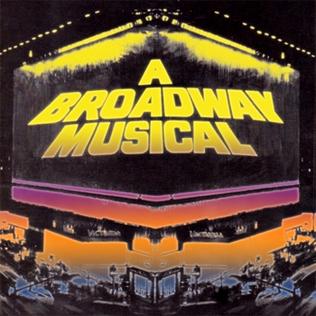
Image result for A BROADWAY MUSICAL 1978

And the Tony Award for most generic title goes to…

In 1964 composer Charles Strouse and lyricist Lee Adams wrote the score for Golden Boy, a musical version of Clifford Odetes play in which the protagonist was played by Sammy Davis, Jr.  Their experience working on a musical with a sometimes temperamental black star and the producers attempts to dampen the ideals of the libretto prompted Strouse and Adams to write a show about a black musical that gets disemboweled by crass producers.  To write the book they turned to William F. Brown, who had a great success with the The Wiz.

The musical centered on an idealistic playwright whose serious play is hijacked by crass producers who turn the play into a basketball themed musical called Sneakers and turn it into a vehicle for a Las Vegas entertainer, a thinly veiled version of Sammy Davis.  A trail run of the musical was held at the theater at Riverside Church with Helen Gallagher and Julius LaRosa in the leads.  George Faison, who choreographed The Wiz both choreographed and directed the production.  Unhappy with the results, the producers fired the original leads and, in a move that seemed like it could have been a scene in the show, George Faison, who was black, was fired.

Suffice to say, the show was not ready for Broadway, but the producers went ahead with the planned Broadway production, hiring Gower Champion to restage the show (Champion only accepted a “Production Supervised By” credit in the playbill).   

George S. Kauffman famously said that satire is what closes on a Saturday night.  A Broadway Musical didn’t even make it that far, opening and closing on a single Thursday night after opening to terrible reviews.  The show deserves credit for trying to poke fun at the crass commercialism of Broadway and the score had some gems.  The song “Lawyers” has some of the funniest lyrics Lee Adams has ever written.  But in the end it was kind of a one joke show that had potential and was ruined by producers so crass they could have been characters in the show.

Oh, and about those producers.  One of them was Garth Drabinsky, the Canadian producer who went to jail for misappropriating funds.  The other was Norman Kean, producer of Oh Calcutta! who stabbed his wife to death before jumping from the fifteenth floor of his Manhattan building.

31. AROUND THE WORLD (1946)

Yes folks, you’re reading that right. Orson Welles and Cole Porter collaborated on a musical. And as you have also probably deduced, this musical extravaganza was based on Jules Verne’s classic adventure story Around the World in 80 Days. How could it be anything but wonderful?

Well, in many ways it was. Orson Welles put a whole circus on stage and even simulated a train ride into the American West and the sets and costumes were designed specifically to remind people of the early silent films of George Miles. Unfortunately, like a lot of shows on this list, the emphasis on spectacle overshadowed the flimsy book that Welles wrote. Another problem was that Porter, still three years away from his Kiss Me Kate  triumph was still in a professional slump brought about in part by a near fatal riding accident. His score was sub-par. Around the World  only had seventy-five performances run. But oh, what a spectacular way to fail! If only the Theater on Film and Tape Archive existed back in 1946.